Your first sample comes back, and something is off. Sleeves are two inches short. The logo sitting near the pocket instead of above it. You paid for that sample, waited five weeks for it, and now you’re starting again.
Nine times out of ten, the cause is the same. The factory got a photo and a short email instead of a tech pack.
A tech pack tells a clothing manufacturer exactly what to cut, sew, measure, label, and pack. It turns the picture in your head into instructions a cutting room can follow without guessing.
“At Argus Apparel, we read tech packs every week, and we build them from scratch for brands that don’t have one yet.”
What Is a Tech Pack?
A tech pack is a technical document that gives a clothing manufacturer every detail needed to produce your garment: flat sketches, fabric and trim information, measurements for each size, stitching instructions, label placement, and packing rules. Factories read it as the build instruction for your style.
You’ll hear other names for it.
- Spec sheet.
- Garment specification sheet.
- Fashion tech pack.
- Same document.
Think about how a house gets built. Nobody hands a contractor a watercolor of the finished house. They hand over drawings with wall thicknesses, window sizes, and materials. Your design idea is watercolor. The tech pack is the drawings.
On the factory floor, a pattern maker drafts from your measurement chart, a merchandiser books fabric from your bill of materials, the sample room picks machines from your construction notes, and an inspector passes or fails pieces against your tolerances. One document, four people, no argument about what you meant.
Why Manufacturers Ask for a Tech Pack Before Sampling
Manufacturers ask for a tech pack because they can’t quote, cut, or sew accurately without one. Fabric consumption, trim cost, and labor minutes all come out of the details inside it. No tech pack means the factory prices your style on assumptions, and those assumptions rarely match what you pictured.
- Costing: A quote built on real fabric consumption and a real trim list held. A quote built on a sketch moves later, and it moves up.
- Fabric booking: If your file says 240 GSM French terry and the factory assumed 280, the wrong roll gets booked and your lead time stretches by weeks.
- Machine planning: A four-thread overlock, a cover stitch, and a barrack machine are three different stations.
- Accountability: When the sample is wrong, and the spec is clear, the factory fixes it at their cost. When the spec was not as expected, you pay for sample two.
What Does a Clothing Tech Pack Include?
A clothing tech pack includes seven blocks: product overview, technical sketches, bill of materials, measurement specifications, construction details, branding details, and packaging instructions. Each one answers a different question the factory floor will ask.
Product Overview
Style number, product name, collection, season, size range, base size, fit type, and date of the current revision.
Style numbers matter once you pass on three products. AA-HD-0142 beats “black hoodie v2” when you’re reordering eighteen months later. Put the revision number and date right beside it.
Technical Sketches
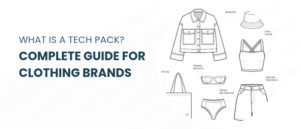
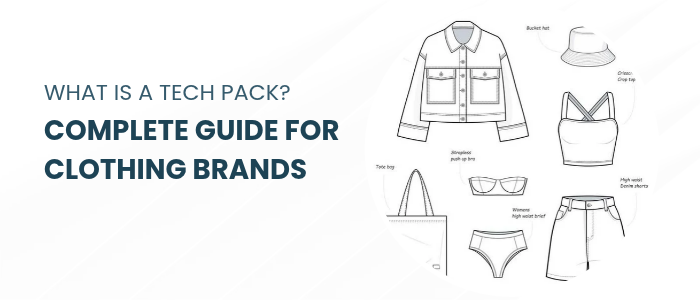
Flat drawings of the garment with no body inside and no shading. Front, back, and a side view if anything happens on the side seam. Black line, drawn to proportion, built in vector so they scale without going blurry.
Then the callouts. These are zoomed views of anything the sample room could read in two ways: the cuff, the pocket bag, the hood seam, the hem finish. Pull each one out at two- or three-times size with an arrow to where it sits. Colorways belong here too, each with its Pantone code.
Bill of Materials (BOM)
The BOM lists every material in or on the finished piece, with enough detail that a sourcing team can buy it without calling you.
| Item | What to specify |
|---|---|
| Main fabric | Composition, GSM, knit or weave construction, yarn count, finish, shrinkage limit, Pantone TCX color |
| Rib or contrast | Construction (1×1 or two-by-one), width, elastane content, color |
| Zipper | Brand, size and type (5 molded plastic), length, slider, tape color |
| Buttons | Line size, material, hole count, color, quantity per garment |
| Elastic or drawcord | Width in mm, type, color, length per size |
| Thread | Type, Tex number, color match per area |
| Labels | Woven, printed or heat transfer, size, content, placement |
| Packaging | Polybag size and thickness, hangtag, carton space |
Add a consumption column once you reach bulk. Knowing a hoodie eats 1.85 meters of 180 cm open width fleece in size L changes how you read a quote.
Measurement Specifications
This section saves or sinks your sample. It holds the size chart, the points of measure, the tolerances, and the grading.
Points of measure (POM) are named spots with a fixed way of measuring each one.
- Body length: from the high point of the shoulder straight down.
- Chest: one inch below the armhole, flat.
- Sleeve length from center back neck along the top of the sleeve to the cuff.
Write the method beside the number, because “chest 22 inches” reads as half chest to one person and full circumference to another.
Tolerances give a pass or fail range: plus, or minus a quarter inch on chest, half an inch on body length, an eighth on neck width. Garments are sewn by hand from moving fabric, so a sample lands in a range, never on a single number.
Grading steps measurements between sizes. A tee might grade an inch across the chest and half an inch in length per size, with neck and armhole moving in smaller steps. Name your base size and show every size in full.

Construction Details
Name the stitch type, seam type, seam allowance, stitches per inch, and finish. Stitch classes come from ISO 4915 and seam types from ISO 4916, and most factories know them cold. A 301 lockstitch for topstitching. A 504 three-thread overlock on a light jersey side seam.
A 514 four-thread where the seam needs strength. A 406-cover stitch on sleeve and bottom hems. Ten to twelve stitches per inch on most jersey work. Mark where barracks go pocket corners, belt loops, fly bottom.
Don’t skip the quiet details:
- Shoulder taping.
- Collar interlining weight.
- Single needle, twin needle, or cover stitched hem.
- Side seam set-in or tubular.
Each one changes the look, the feel, and the price.
Branding Details
- Logo placement with real numbers. “Print center chest, top of print 3.5 inches down from high point of shoulder, 10 cm wide,” not “center chest.”
- Print or embroidery method: Water-based, plastisol, puff, silicone, DTF, or embroidery with thread codes.
- Neck labels: Woven, satin printed, or tugless heat transfer, with size and attachment.
- Care labels: Fiber content, care symbols, and country of origin. Brands selling in the US work to the FTC care labelling rule and the Textile Fiber Products Identification Act, and children’s wear carries CPSIA requirements.
- Hangtags: Material, string or pin, and which buttonhole or seam it hangs from.
Packaging Instructions
Spell out the fold, the polybag size and thickness with its suffocation warning, whether tissue goes in, and where the hangtag sits once folded.
Then go up a level. Carton dimensions, maximum weight per carton (most freight handlers want to stay near 15 kg), the carton label with style, color, size, and quantity, and where the barcode sticker lands. Shipping a ratio pack? Write it out: S-1, M-2, L-2, XL-1.
How to Create a Tech Pack
Building a tech pack runs in eight stages, from locking the design to a final read before you send it. Most brands work in Adobe Illustrator for the flats and a spreadsheet for the data, then export one PDF.
- Lock the design: Decide silhouette, fit, fabric family, and details, then stop changing them.
- Draw the flats: Front and back in vector, plus callouts for any detail that could be read two ways.
- Pick fabrics and trims: Get swatches in hand first. A 240 GSM fleece from one mill drapes nothing like a 240 GSM fleece from another. Record specs from the mill, not from memory.
- Build the BOM: One row per material, with color codes, sizes, and placement. Write it so a stranger could shop from it.
- Write the measurements: List your points of measure, describe how each one is taken, fill in the full-size chart, set tolerances. Measuring a garment you already wear and like is a fine starting point.
- Add construction: Stitch and seam types, stitches per inch, seam allowances, barracks, hems, interlining. Annotate straight onto the flats where you can.
- Add branding and packing: Logo artwork at print size with placement measurements, label details, fold, polybag, carton label, barcode position.
- Review before you send: Any line you can’t picture exactly, a factory can’t either. Send it to your manufacturer for a read before anyone cuts fabric.
“First tech packs take most brands a week or two. The second one takes a day, because you reuse the shell.”
Tech Pack vs. Fashion Sketch
A fashion sketch sells the idea. A tech pack builds the product. The sketch belongs in your lookbook. The tech pack belongs to the factory’s hands.
| Feature | Fashion Sketch | Tech Pack |
|---|---|---|
| Purpose | Design concept | Production blueprint |
| Measurements | No | Yes |
| Bill of materials | No | Yes |
| Construction details | Limited | Complete |
| Manufacturer ready | No | Yes |
| Sampling support | Limited | Yes |
A styled figure drawing stretches proportions on purpose. Legs get longer, waists get smaller, fabric falls in ways real fabric doesn’t. No pattern maker can work from that. Keep the sketch for your buyers and send the tech pack to production.
Common Tech Pack Mistakes
The same eight problems show up again, and each one costs money or weeks.
Half-written measurements: A spec with chest and length but no shoulder, armhole, neck drop, or sleeve opening leaves the pattern maker to invent the rest. One brand sent chest figures with no method noted; the sample room read them as half chest, and the first fit came back twice as wide. Five weeks gone.
An incomplete BOM: Leave out thread, interlining, or a cord tip and the factory substitutes whatever is in the storeroom. Your costing shifts too.
Low-quality sketches: Screenshots and phone photos of paper drawings get interpreted, not followed. Pocket shapes and hem finishes suffer first.
No stitching details: The sewing line defaults to its fastest option. You wanted a cover stitched hem and got a single needle hem that curls after one wash.
Vague trim specifications: “Metal zip” covers hundreds of products at ten different price points.
Grading that doesn’t hold: Copy a chest grade across every size without moving armhole, neck, and sleeve, and your 3XL fits like a stretched medium. Returns follow, and so do reviews about your sizing.
Old revisions in circulation: You email a change, the cutting room runs version two anyway, and 1,200 pieces carry the wrong neck label. Version control costs nothing.
No packing instructions: Wrong fold, wrong bag, hangtag on the wrong side. Retail accounts charge back for this, and some refuse the delivery.
“Every gap in a tech pack gets filled by somebody, and that somebody isn’t you.”
How Tech Packs Improve Apparel Manufacturing
A good tech pack shortens sampling, cuts revisions, holds sizing steady, and makes quality control measurable. It also gives you quotes you can compare between factories.
- Faster sampling: The factory goes straight to pattern instead of emailing questions for a week.
- Fewer revision rounds: Three or four rounds is normal without one. Two is normal with one, sometimes one.
- Quality control with teeth: Tolerances turn “looks about right” into pass or fail.
- Sizing that stays put: Your large fits the same this season as last season, because the grading rules didn’t move.
- Cleaner messages: “POM 4, sleeve opening, half an inch over tolerance” gets solved in one reply.
- Easy reorders: Same file, same pattern, matching run twelve months later.
- Sharper costing: Three factories quoting off one document give you three comparable numbers.
“A sample round costs money and calendar time. A bulk run with the wrong trim costs far more. Documentation is the cheapest insurance in apparel production.”
Who Needs a Tech Pack?
Anyone paying a factory to make clothing. That covers startups, private label brands, sportswear labels, uniform suppliers, and retail chains. The document changes shape with the product. Nobody gets to skip it.
Fashion startups: You have the least room for a wasted sample round. A clean tech pack also takes you seriously, quoted faster, and offered better minimums.
Private label brands: You’re adapting a factory’s existing block, so your file leans on measurements, branding, and packing. The base garment may be theirs. The product is yours.
Sportswear and activewear brands: These carry the most technical detail in apparel: flatlock seams, bonded hems, gussets, elastane percentages, wicking finishes, reflective tape placement. Performance claims need test data, and test data starts with a fabric spec.
Retail and established brands: Here the tech pack carries compliance too: care labelling, fiber content, country of origin, barcode, and carton standards for distribution centers. Big accounts charge back for mistakes in any of them.
Can You Manufacture Clothing Without a Tech Pack?
You can, and people do it daily. The question is, what does it cost? Without one, you hand your product to whoever is on the cutting table that morning, and you lose any ground to stand on when the goods arrive wrong.
Expect extra sample rounds, quotes that climb after sample one, fit that drifts between sample and bulk, and a reorder that doesn’t match the first order.
There’s a middle road, and latest brands take it. Give the factory a reference garment, your sketches, your fabric preferences, and your measurements, then let their development team build the tech pack with you.
We do this at Argus Apparel for a good share of the brands who come to us.
It has a real advantage. A manufacturer writing your tech pack writes it against machines they own and fabrics they can source, so the document comes out buildable rather than theoretical.
On cost, freelance tech pack designers run 150 to 600 US dollars a style, and agencies charge more.
Weigh that against one wasted sample round plus six lost weeks of your selling season.
How Argus Apparel Supports Clothing Brands
Brands reach us at one of two points. Either they have a tech pack and want someone to make the garment, or they have an idea and no idea how to write it down. We work both ways.
| What’s blocking you | How we manage it |
|---|---|
| A tech pack you’re unsure about | We review it line by line and send back the gaps before anyone cuts fabric |
| Sketches and a reference garment, nothing more | Our product development team builds the tech pack with you |
| A sample that fits wrong | We re-measure, rework the pattern and tell you which spec line caused it |
| Fabric you can’t find | We source from mills we already buy from, with swatches sent to you first |
| Sizes running inconsistently | We regard the size set and lock the rules into your spec |
| One factory for sampling and bulk | Sampling, cut-and-sew manufacturing and bulk under one roof |
| Your label on a proven base garment | Private label manufacturing with your branding, labels, and packing |
| Worry about what ships | Inline and final quality control measured against your own tolerances |
Pattern making sits at the center of all of it, and our pattern room works in both inch and centimeter specs, so brands in the US, UK, and Europe each get measured the way they’re used to.
We’d rather spend an hour fixing your document than six weeks fixing your order. Start with our custom apparel manufacturing overview and send us what you have.
“Even a phone photo of a garment you like gives us something to work with.”
Tech Pack Best Practices
A few habits separate brands whose samples land close from brands paying for round three.
- Number and date every revision: V1, V2, V3 on the cover page and in the file name.
- Annotate on the drawing: Notes with arrows get followed. Notes in a paragraph get skimmed.
- Give every measurement a tolerance: A spec that can’t be inspected can’t be enforced.
- Keep sketches sharp: Vector files, exported at high resolution. Small on the garment, big on the page.
- Update the BOM the day something changes: Swapped the zipper? Change the line, bump the version, resend.
- Walk your manufacturer through it before sampling: A thirty-minute call catches what a PDF never will.
- Store every version you’ve sent: When a reorder goes wrong two years later, the archive says which version shipped.
- Write for someone who has never spoken to you: The person sewing your garment wasn’t on the call.
“One more thing that brands skip: measure your approved sample, write the real numbers back in, and make that your production spec. The approved fit is the truth.”
Conclusion
A tech pack is the difference between ordering a product and hoping for one. It writes what you pictured in a form a cutting room, a sewing line, and an inspector can all act on, which is the only way a garment comes out the same twice.
It protects you as well. With every measurement and trim written down, a wrong sample is the factory’s problem. With nothing written down, it’s yours to pay for.
If you’re sitting on a design and don’t know where to start, send it over.
Argus Apparel reviews tech packs, builds them from scratch, makes patterns, sources fabric, runs sampling, and manages bulk production.
“Send your sketches, your reference garment, or just your idea, and we’ll tell you what it takes to make it.”
Frequently Asked Questions
What is a tech pack in clothing manufacturing?
A technical document telling a garment factory how to make your style. It holds flat sketches, fabric and trim details, size measurements, stitching instructions, label placement, and packing rules.
Why is a tech pack important?
It removes guessing. The factory prices, patterns, cuts, sews, and inspects from one document, so your sample lands closer, and your bulk run matches the sample you approved.
What should a clothing tech pack include?
Product overview, technical sketches with callouts, bill of materials, measurements with tolerances and grading, construction details, branding and label placement, and packaging instructions.
Can I manufacture clothing without a tech pack?
You can, but expect extra sample rounds, shifting quotes, and no grounds to reject goods that come back wrong. Most factories will help you build one instead.
How much does it cost to create a tech pack?
Freelancers charge 150 to 600 US dollars a style, with outerwear and activewear at the top end. Many manufacturers, Argus Apparel included, build it as part of product development.
Who creates a fashion tech pack?
A technical designer, a product developer, or a freelance specialist. Smaller brands write the first draft themselves and let the factory’s development team correct it.
What is the difference between a fashion sketch and a tech pack?
A sketch shows the idea on a stylized figure. A tech pack shows the garment flat, with measurements, materials, and construction written down. One sells the concept; the other gets it built.
Does every clothing brand need a tech pack?
Yes, if someone else is making your clothing. The detail level changes between a private label tee and a ski jacket, but the document is not optional.
Can manufacturers help create a tech pack?
Many can, and it’s a practical place to start. A factory writes it against machines they own and fabrics they can source, so the result is buildable. Argus Apparel does this for brands producing with us.
How does a tech pack reduce production errors?
It replaces interpretation with instruction. Measurements come with methods and tolerances, seams with stitch types, logos with placement in inches. Inspectors check numbers instead of offering opinions.
What software is used to create apparel tech packs?
Adobe Illustrator for flats and a spreadsheet for data covers most brands. Purpose-built options include Tech packer, Backbone PLM, Brow wear, and CLO 3D. Pattern rooms run Gerber, Lectra, or Ophite.
How often should a tech pack be updated?
Every time something changes: new fabric, new trim, a measurement corrected after a fit session, a new label. Bump the version, date it, resend the whole file.
What is a Bill of Materials (BOM) in a tech pack?
The list of every material in the finished garment: fabrics, rib, zippers, buttons, elastic, thread, labels, hangtags, and packaging, each with enough detail to be bought without questions.
What are Points of Measure (POM) in a tech pack?
The named spots on a garment where measurements are taken, with the method for each. Chest: one inch below the armhole. Body length is measured from the high point of the shoulder. The method matters as much as the number.
Can Argus Apparel help with tech pack development and apparel manufacturing?
Yes. We review tech packs, build new ones, make patterns, source fabric, and trims, run sampling, grade size sets, handle cut-and-sew, private label, and bulk production with quality control throughout.