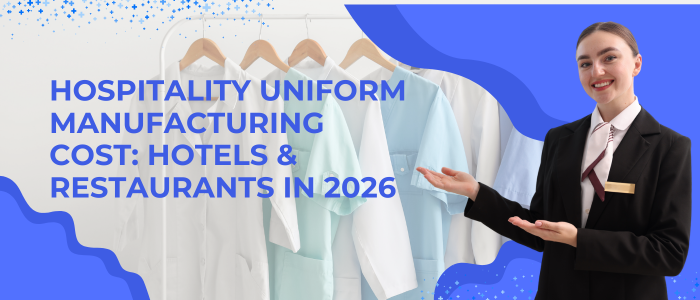
Walk into a good hotel lobby or restaurant and the staff uniforms do a lot of talking before anyone says hello. A crisp chef’s coat, a properly tailored front desk blazer, a housekeeping polo that still looks sharp after two hundred wash cycles. These pieces are silent brand ambassadors, and they shape the first impression your guests walk away with, whether you planned for them to or not.
Which makes the cost question more important than it looks. Hospitality uniforms seem simple from the outside, yet real pricing depends on fabric grade, design detail, branding, order size, and a handful of other variables most procurement managers do not fully price out until quotes start hitting the inbox. This guide breaks down what goes into hospitality uniform costs in 2026, so your next order lands closer to budget and further from surprise.
For chains looking to build a unified brand program, producing uniforms under private label apparel arrangements keep branding consistent across properties and gives you control over every detail.
Why Hospitality Uniform Costs Swing So Wide
There is not really a single “hospitality uniform” category. A boutique hotel uniform program and a fast-casual restaurant uniform program can look completely different on paper, and price out even more differently.
Chef coats need heavyweight twill, double-breasted construction, reinforced cuffs, and stain-resistant finishing. A server’s apron is a simpler build but usually orders in much higher quantities per location. Housekeeping uniforms prioritize breathability and washability because they run through industrial laundry cycles daily. Front desk attire, by contrast, leans closer to office wear with blazers, button-downs, and tailored pants.
Every role has its own spec, its own preferred fabric, and its own cost profile. Which is exactly why a single flat rate per uniform rarely tells the truth.
The Average Cost Range in 2026
Entry-level hospitality uniforms price out between $15 to $35 per unit for large orders. Average hospitality uniforms with higher quality materials, embroidered branding, and a more fitted cut cost $35 to $75. Luxury items such as a structured blazer for concierge, chef’s coat in imported twill, or a doorman’s set of uniforms with detailing can easily go over $100 a piece, without being too far out of line.
Custom, small batches cost more per unit as the fixed costs to set up work are spread across a smaller run. Property wide rollouts with high quantities-lowers the cost by 30% or more. In the past several years, cotton prices, shipping costs and terminology availability have changed, so even buyers who have placed orders in the past are requesting updated pricing on orders being renewed.
Cost Comparison Table
| Tier | Price Range (per unit) | Typical Use Cases | What You Get |
|---|---|---|---|
| Entry-Level | $15 – $35 | Bulk basics: server polos, aprons, housekeeping tops | Poly-cotton fabrics, printed brand, basic cut, few options for customization |
| Mid-Range | $35 – $75 | Branded shirts, fitted chef coats, standard front desk attire | Superior quality fabrics, embroidered logos, fitted fit, double stitching |
| Premium / Luxury | $100+ | Imported blazers for concierges, imported twill chef coats, doorman uniforms | Custom cut and sewn, specialty fabrics, trims, buttons, finishing |
Fabric Costs and Material Selection
Fabric is the biggest expenditure: 35-50% of the total. Hospitality fabrics are selected differently than fashion fabrics because they are more “exposed”.
Comfort fabrics, cotton, and cotton blends, if you have a long day and are interacting with guests. They are amazingly comfortable and breathable, but wrinkle more than blends.
Polyester blends for housekeeping and waiters. Resistant wrinkles, dries quickly and colours are fast. Today’s hospitality uniforms feature a poly-cotton in 65/35 or 80/20 blends.
Specialty fabrics, with moisture-wicking, stain repellent, or deodorant properties can be expensive but offer huge cost savings overall. Best if you work in a hot kitchen or a high-energy job.
When you are choosing fabric, you are really answering three questions at once. Can it survive a hundred industrial washes without losing shape? Is it comfortable through an 8-to-12-hour shift? Does it match the climate your staff works in? A deeper look at different fabric types and how each one behaves across use cases is worth reading before signing off on material specs. Understanding fabric types meticulously keeps you from paying premium for a material that does not match the job it is supposed to do.

Design Complexity and Uniform Types
Uniforms are designed to be either amazingly simple or intricate. The intricacy influences your cost.
Chef coats and aprons require certain features: double thickness on the fronts, back vents, tied buttons and pockets. Uniforms for servers may require an apron as well as a branded shirt: two units per worker. Blingy garments such as blazers and dress shirts, along with trousers, often make up front desk uniforms, which require more in-depth pattern making and finishing. The most “user friendly” is housekeeping with comfortable tunics or durable polo shirts or button-down shirts with double-reinforced seams and hems.
Then come the extras. Practical pockets, logo buttons and hidden zippers, double stitching around the seams or cuffs and contrasting trim. And each extra costs time and time is money. 500 uniforms x six properties and those extras are no longer variable.
Customization and Branding Costs
Branding is what makes a uniform yours instead of just a shirt and pants.
Embroidered logos last longer, look more premium, and cost more than printed logos. Most hotel and restaurant brands go with embroidery on visible pieces like chef coats, blazers, and polos, while saving heat-transfer prints for aprons or secondary items. Custom colours require dye lots, which carry minimums of their own. Custom trims like piping, contrast collars, or branded buttons raise per-unit cost but build stronger brand consistency across roles.
Name tags, role identifiers, and branded woven labels are small costs individually. Across multi-location rollouts they add up fast. Branded packaging and hangtags matter less internally but come into play if your uniforms double as retail merchandise in a gift shop or lobby store.
Labor and Production Costs
Cutting, stitching, and finishing each carry their own labour rate. Tailored pieces like blazers or chef coats demand skilled operators and move through the production line more slowly than simpler items. Quality control is another layer that separates serious uniform suppliers from casual ones, and the serious one’s charge for it because it is worth charging for.
Regional differences matter too. Domestic production in the US tends to run higher on labour cost but delivers faster turnaround, tighter quality oversight, and easier communication. Offshore production can reduce costs at scale but adds lead time, shipping complexity, and quality-control distance.
MOQs and Why They Shape Your Budget
Minimum order quantities vary heavily across uniform categories. A basic polo might have an MOQ of 100 to 200 units. A fully custom-tailored blazer could require 300 to 500 per size and colour combination. Chef coats and aprons usually sit somewhere in the middle.
For small boutique operators or single-location restaurants, high MOQs can feel frustrating. Many manufacturers do offer lower MOQ options for pilot runs or phased rollouts, especially when there is a clear reorder timeline. Multi-location brands have an easier time: meeting volume thresholds is rarely a concern when you are sitting out a dozen properties at once.
Durability vs Upfront Cost
This is the conversation that separates short-term thinkers from buyers who understand the real math.
A cheap uniform costs less today and wears out faster. A quality uniform costs more today and survives two or three times longer. Cost per wear, not sticker price, is the number that matters in hospitality. A $40 shirt that survives 18 months of industrial washing beats a $25 shirt that falls apart in six months, every single time.
Durable fabrics, reinforced stitching, and proper construction reduce replacement frequency. They also protect brand image. Nothing says “we stopped caring” like faded polos and fraying cuffs on a Tuesday lunch shift.
Sampling and Product Development
Before production, you need samples. For uniforms, sampling is not optional. Fit matters across body types, fabrics need to survive wash tests, and finishes need to prove they do what the tech sheet promises.
Expect two to four sample rounds per uniform style. Each one costs money but catches issues that would be extremely expensive to fix at scale. A waistband that rolls, a collar that curls after washing, a fabric that looks great dry and wrinkles badly damp. Far better to find those problems in the sample room than across two thousand finished pieces.
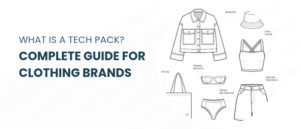
If you want a clearer sense of how everything flows from tech pack to final delivery, this walk-through of the custom apparel manufacturing process covers each stage in order. Understanding the custom manufacturing process in advance helps your procurement team ask sharper questions early and avoid surprises during production.
Shipping and Logistics
Bulk uniform orders ship differently than small retail orders. Most manufacturers can split deliveries across properties, which saves you the internal distribution headache. Poly bagging, size and role tagging, and property-specific labelling all add cost but save real time on the receiving end.
Lead times in 2026 sit around 60 to 120 days for bulk uniform programs, depending on complexity and production location. Planning renewals 4 to 6 months ahead is the realistic standard now. Rush production exists but charges a premium, and it usually is not fun for anyone involved.
For larger rollouts and chain operators, bulk apparel manufacturing gives you the most efficient cost per unit, but only when timelines are planned properly. Poorly scheduled bulk apparel manufacturing turns into rush fees and missed launch dates, which defeats the purpose of ordering at volume in the first place.
Where Argus Apparel Fits In
Argus Apparel works with hotel groups, restaurant brands, and hospitality procurement teams to produce uniforms that balance durability, comfort, and brand presentation. As an established partner among uniform manufacturers serving the US hospitality sector, the team supports everything from fabric sourcing and sampling to final production and split shipping across locations. Flexible MOQs let boutique operators and national chains both find a workable starting point. Working with proper uniform manufacturers also means consistent quality across reorders, which matters when your staff turnover outpaces your uniform cycles.
Wrapping It Up
Hospitality uniform costs are not a mystery once you look at the line items honestly. Fabric, design complexity, customization, labour, and order volume each contribute to the total, and any one of them can move your budget by a meaningful amount. The brands that get this right treat uniforms as a long-term brand asset, not just a checkbox on the operations list. Invest in quality fabric, plan realistic MOQs, sample properly, and partner with a manufacturer who delivers consistency across every order. Your staff, your guests, and your accountant will all feel the difference.